Port-day notes Shopping on a port day
What to Buy in Kusadasi on a Cruise Stop
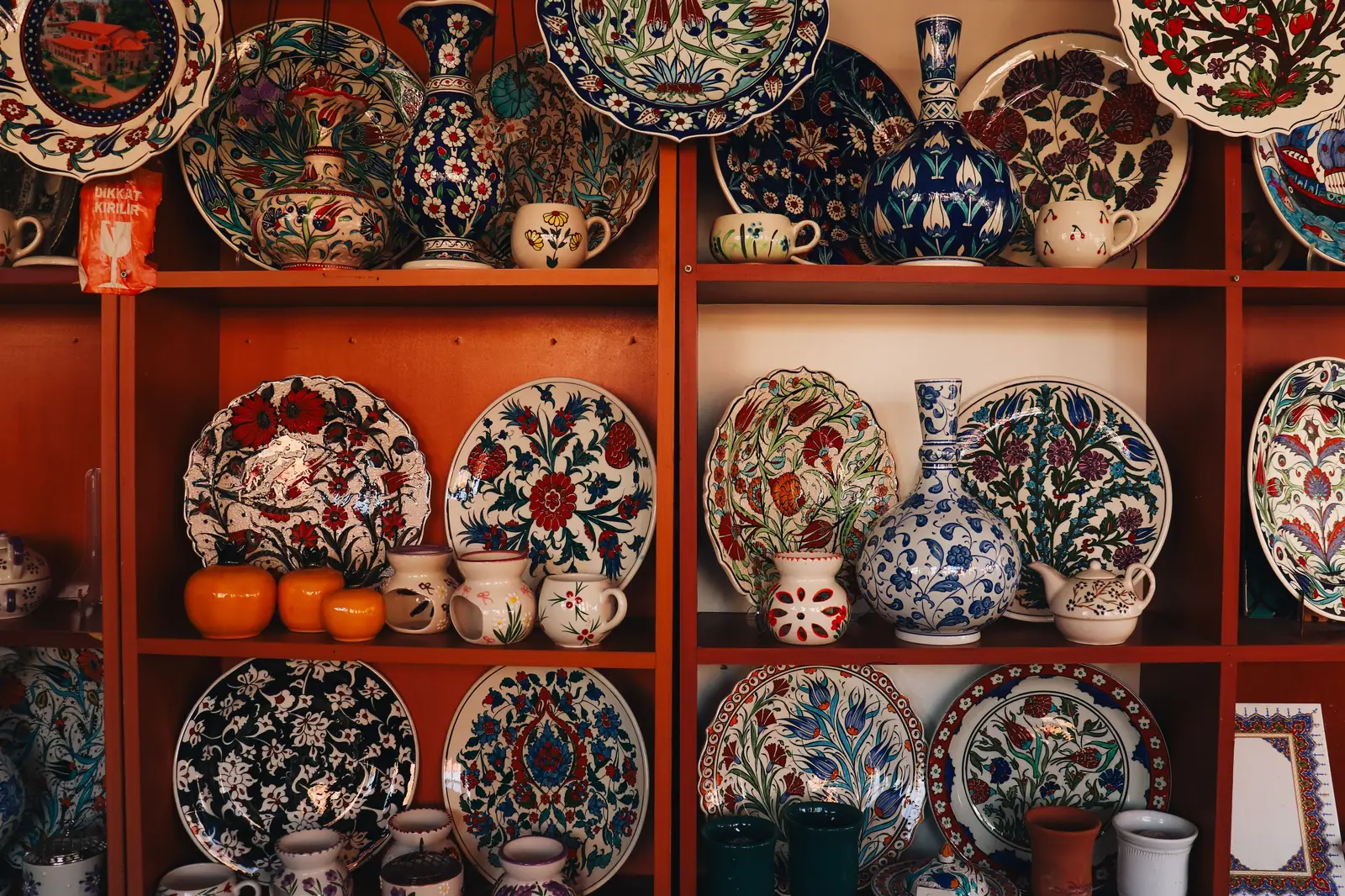
Kusadasi has welcomed travelers and traders for centuries, and its shops still carry the crafts of this coast: hand-painted ceramics, handwoven carpets, soft leather, olive-oil soaps and boxes of Turkish delight.
The short answer
The souvenirs that travel best from Kusadasi are Turkish delight, hand-painted ceramics, blue evil-eye beads, cotton peshtemal towels, olive-oil soaps, spices, leather goods and, for a bigger purchase, a handwoven carpet or kilim. The town center begins about 50 meters from the cruise terminal exit, so even a short call leaves time to browse. Euros, US dollars and cards are widely accepted in shops, and friendly bargaining is normal.
- Town center from the terminal exit
- about 50 meters
- Paying in shops
- Turkish lira, euros, US dollars or a card
- Bargaining
- normal and friendly, never required
- Best light souvenirs
- Turkish delight, ceramics, evil-eye beads, soaps, towels
What are the best souvenirs to buy in Kusadasi?
The best souvenirs from Kusadasi are the ones made around here and easy to carry home: Turkish delight, hand-painted ceramics, evil-eye beads, olive-oil soaps and cotton peshtemal towels. They are light, they pack flat or small, and they are genuinely part of daily life on this coast rather than something made only for visitors.
For guests with a little more room in the suitcase, leather jackets and bags, silver and gold jewelry, and handwoven carpets and kilims are the region's long-standing crafts. These are the pieces people remember buying years later, because there is usually a story and a cup of tea attached to them.
Which treats travel well back to the ship?
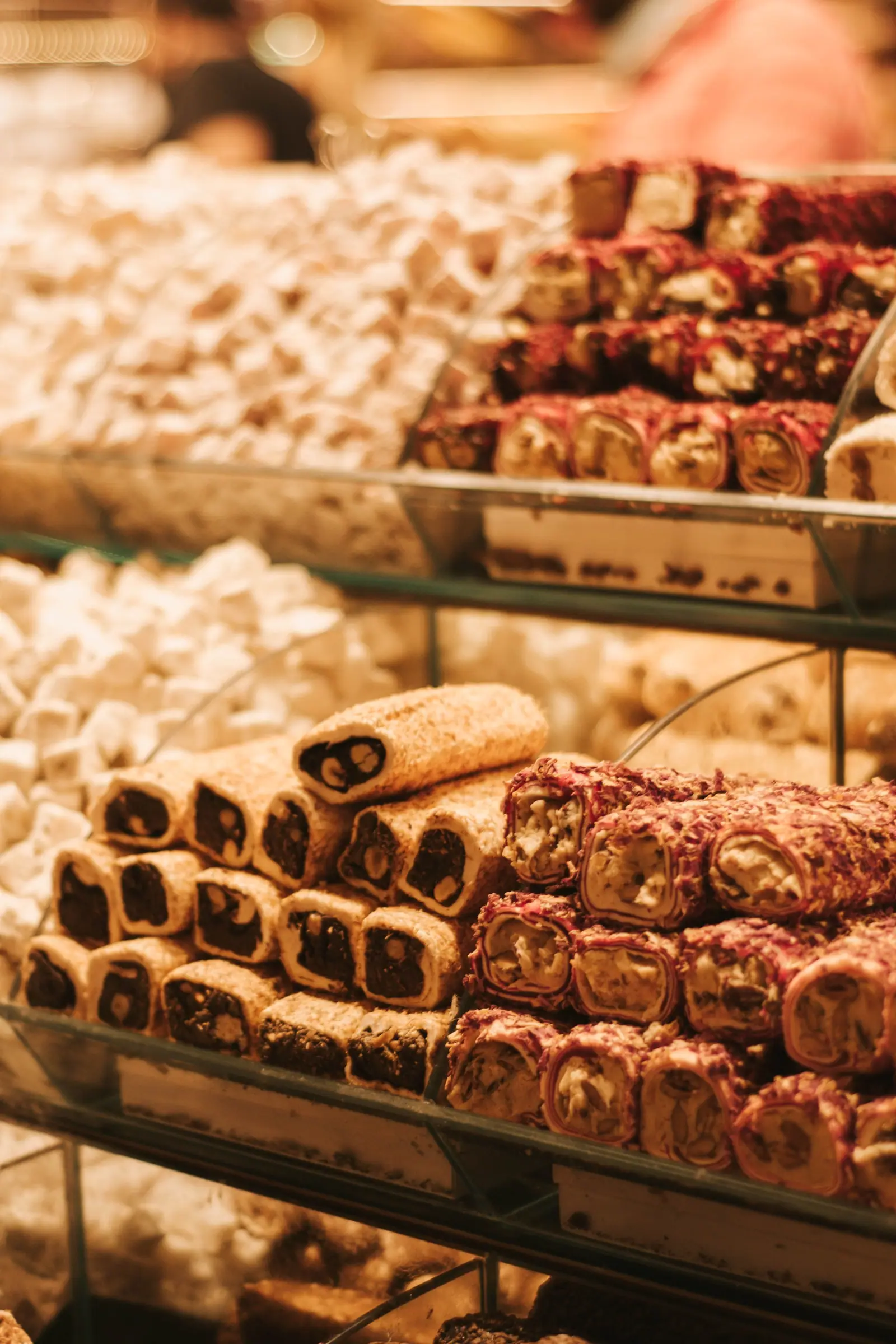
Turkish delight (lokum) travels best: it comes boxed, keeps well, and many shops along the bazaar streets are happy to let you taste a few flavors before you choose. Pistachio, rose and pomegranate are the classics, and many shops will seal a mixed box for the trip home.
Spices, dried fruit, apple and pomegranate teas, and loose Turkish tea are other easy picks. If you would like to taste more of the local kitchen before you shop, our lunch on a port day guide covers where food fits into a shore day.
Planning the day? Match a tour to your hours ashore
-
Time in port: Under 5 hours ashore
The Open-Air Circle
No tickets and almost no walking: Artemis, Selcuk and a drive past the ruins.
Tour length: 3-4 hours
-
Time in port: 5 to 8 hours
Just Ephesus
Ephesus from the Upper Gate down to the Lower Gate, and back with time to spare.
Tour length: 3-3.5 hours
-
Time in port: 8 to 9 hours
Marble, Mosaics and Artemis
All of Ephesus, the Terrace Houses and the Temple of Artemis.
Tour length: 5.5-6.5 hours
-
Time in port: 9 hours or more
The Road of Paul and John
Ephesus, the House of the Virgin Mary, St. John and Artemis.
Tour length: 6-7 hours
-
Time in port: Late arrival, tender or tight call
All-Aboard Ephesus
We plan backward from all-aboard and fit in only what fits.
Tour length: Fits your call
-
Time in port: You have your own list
Your Ship, Your Day
Tell us your ship and your wishes; we build the day around both.
Tour length: Fits your call
Every tour is private and priced from €33 per person for groups of 8 or more; smaller groups get a private quote. Any group size: 1 to 52 people per coach, and more coaches for larger groups. Entrance tickets are extra, at the official price.
What makes a good small gift from Turkey?
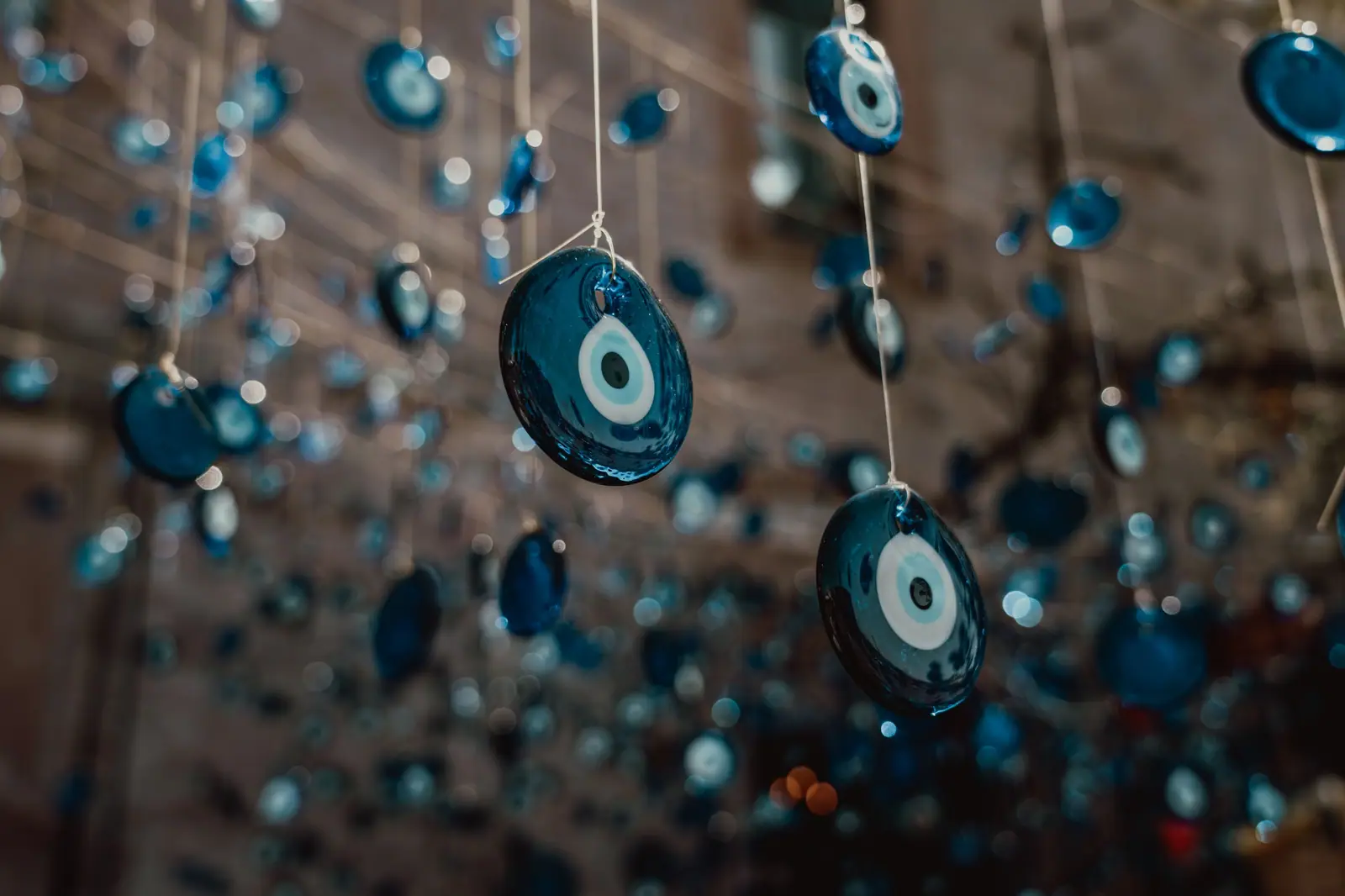
A blue glass evil-eye bead, the nazar boncugu, is the gift almost everyone brings home. You will see it over doorways, in cars and on babies' clothes all over Turkey, where it is a cheerful wish for good luck, and it comes as keyrings, bracelets and wall hangings.
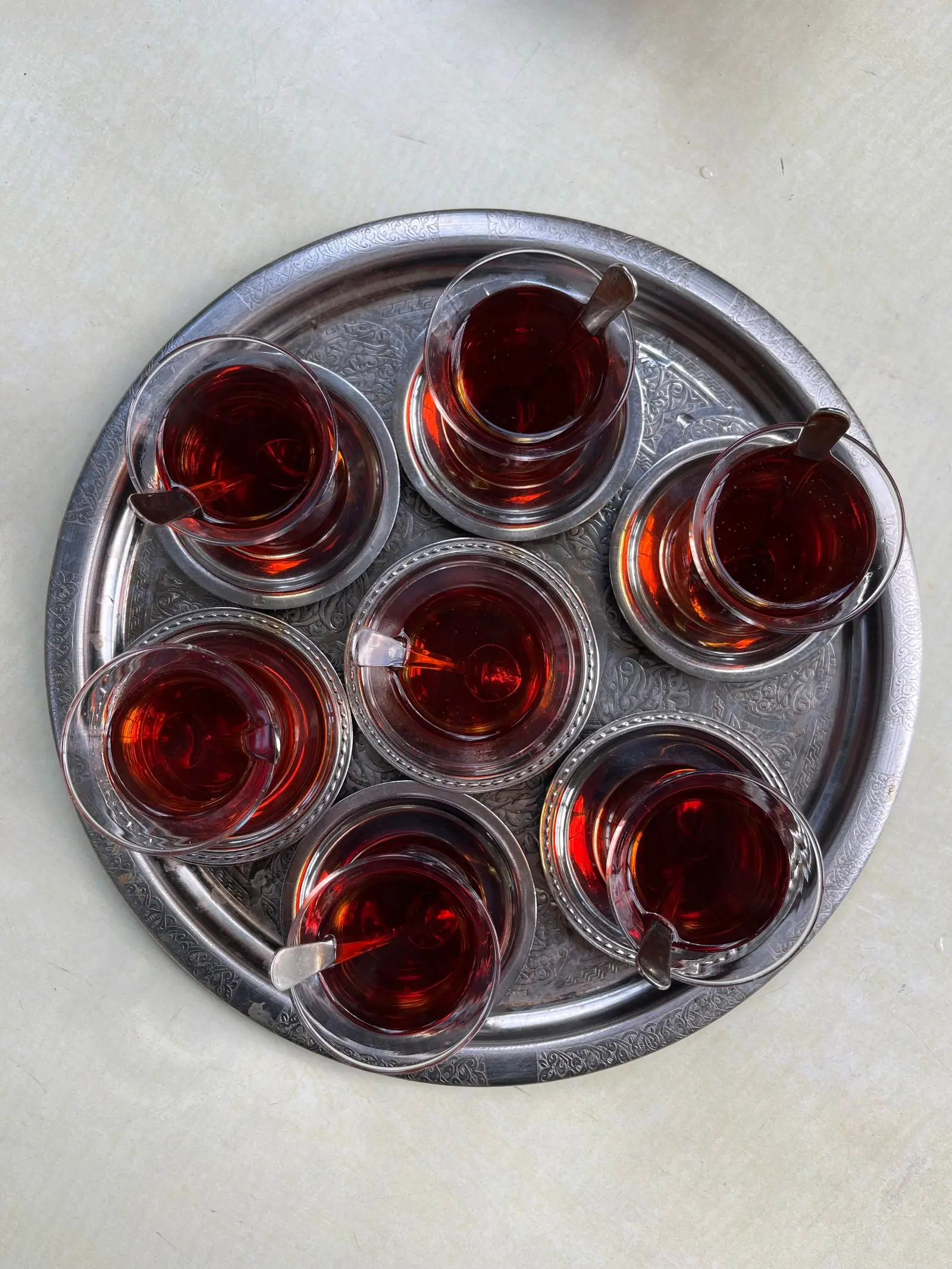
Tulip-shaped tea glasses, a small copper coffee pot (cezve) with a bag of Turkish coffee, olive-oil soaps and soft cotton peshtemal towels are other gifts that suit almost anyone. Wrap the glasses in a towel and they ride home safely in a carry-on.
Is buying a carpet or leather in Kusadasi worth it?
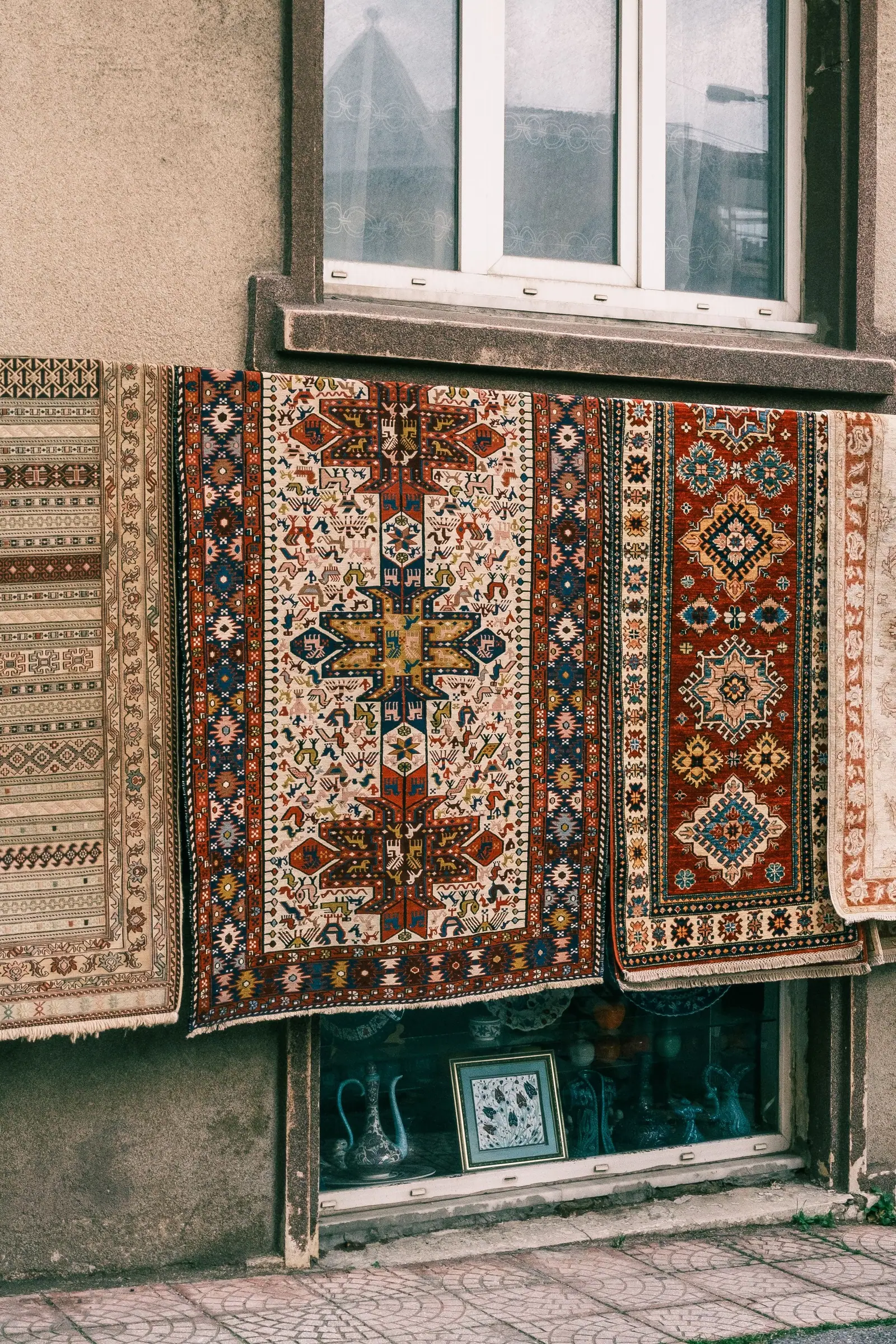
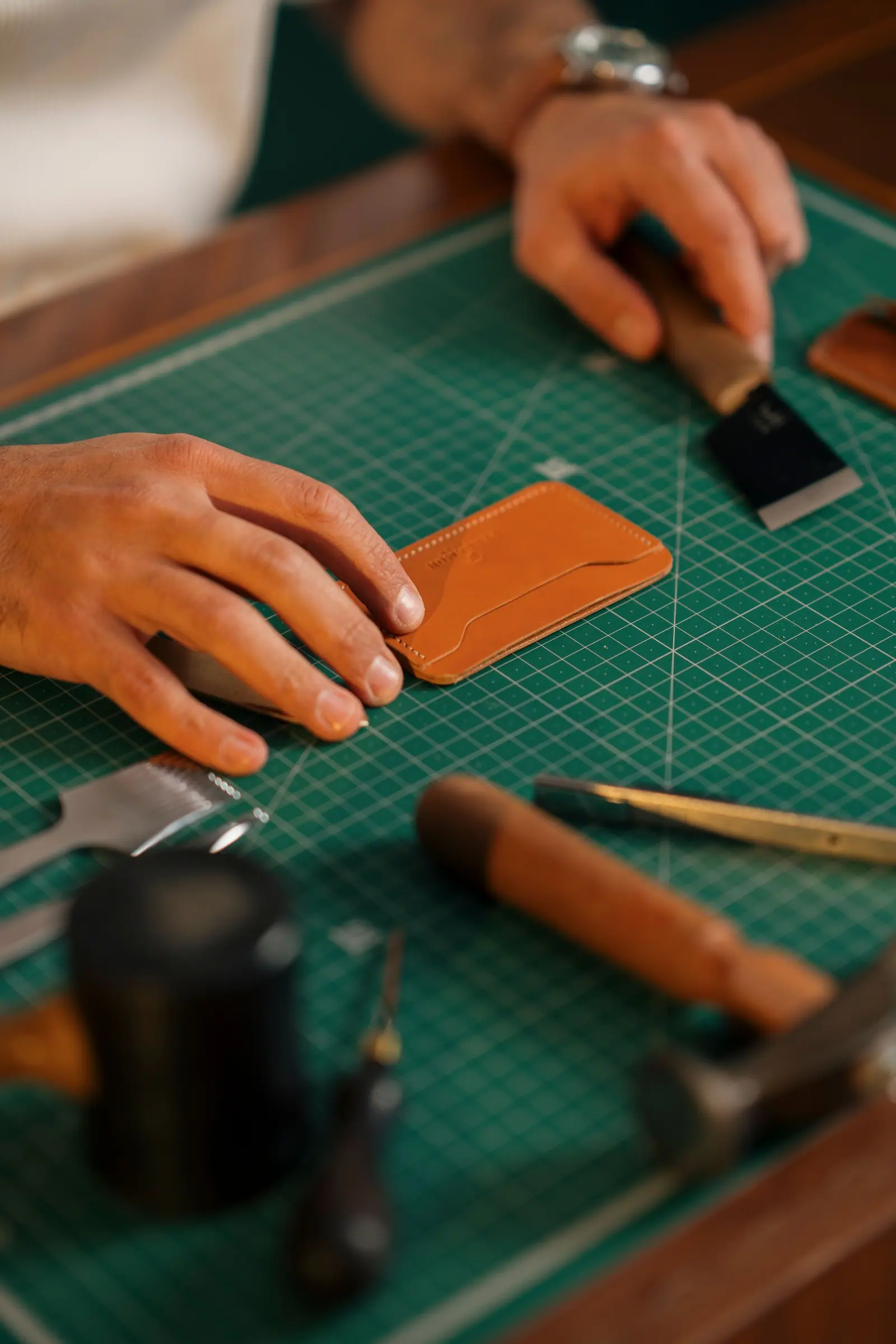
For many guests, yes: a handwoven carpet or a made-to-fit leather jacket is the one purchase from the whole cruise they still use every day. Carpet weaving and leatherwork are long-standing crafts in this region, and a showroom visit is also a relaxed, interesting break where you can see how the work is done.
A good carpet shop will show you knots, wool, dyes and patterns, explain the difference between a carpet and a flat-woven kilim, and let you take your time without any obligation to buy. Many can arrange shipping for larger pieces; ask for the details in writing so everything is clear. If you would like a showroom stop on your day, our Selcuk and Ephesus panoramic tour has room for one, and any custom shore excursion can include a carpet-weaving demonstration or a leather showroom if it interests you.
Where should I shop near Kusadasi cruise port?
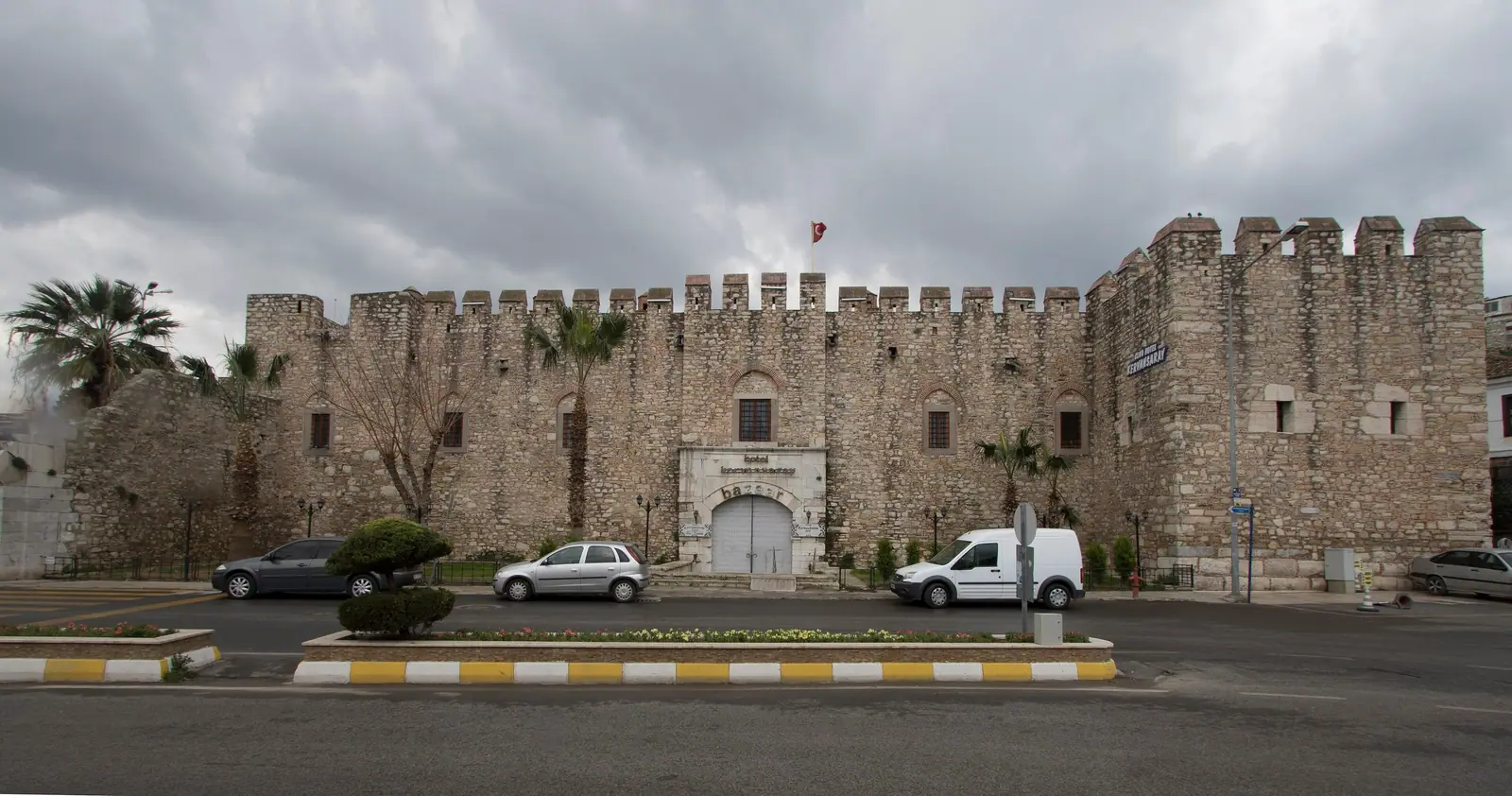
Most shopping happens in the bazaar streets that start right behind the harbor, about 50 meters from the terminal exit. Covered and open lanes there sell leather, carpets, ceramics, jewelry, sweets and everyday holiday goods, and the seventeenth-century caravanserai stands at the edge of the old quarter as a good landmark.
Inland, Sirince village is known for its fruit wines and olive-oil soaps sold by family shops in the lanes, and many wine shops are happy to pour a small taste. A stroll there takes about 1 to 1.5 hours, so it fits well after Ephesus; our Sirince village guide explains how. For the walk from the pier into town, see Kusadasi from the pier.
How do paying and bargaining work in Kusadasi shops?
Shops near the port take Turkish lira, euros, US dollars and cards, so you rarely need to change money just to shop. Bargaining is normal in the bazaar, and it is a friendly conversation rather than a contest: ask the price, offer what feels fair to you, and enjoy the chat. Fixed-price shops simply tell you so, and that is fine too.
Our money on a port day guide covers cards, cash machines and what to bring. If you plan to buy wine in Sirince, check your cruise line's rules first: many lines hold bottles bought ashore until the end of the voyage. And buy new crafts rather than anything sold as an antique or an ancient coin, because Turkey strictly controls the export of antiquities.
How much shopping time fits into a port day?
On most calls, an hour in the bazaar at the end of the day fits easily, because the shops start right outside the terminal and cost no driving time. We plan every private tour backward from your all-aboard time, so the last stop can be the bazaar lanes, a coffee, or straight back aboard, whatever you prefer.
Our back to your ship on time guide shows how that timing works, and the meeting point page explains where your guide waits: right outside the cruise terminal exit, about a minute once you are out. Tell us on the inquiry form what you would like to bring home, and we will build the time in.
Questions cruise guests ask us
What is Kusadasi famous for buying?
Kusadasi is best known for leather, handwoven carpets and kilims, hand-painted ceramics, jewelry and Turkish delight. Smaller favorites are blue evil-eye beads, olive-oil soaps, spices and cotton peshtemal towels.
Can I pay in euros or dollars in Kusadasi shops?
Yes. Shops near the cruise port widely accept euros, US dollars and cards alongside Turkish lira. Entrance ticket booths at the sites are different: they take lira or a card, not euro cash.
Is bargaining expected in Kusadasi?
Bargaining is normal in the bazaar and is meant to be friendly. You never have to bargain, and some shops have fixed prices and will simply say so.
How far are the shops from the cruise terminal?
The town center and the bazaar streets begin about 50 meters from the cruise terminal exit, so you can walk straight in without a taxi or a shuttle.
Can I bring wine bought in Sirince back on the ship?
It depends on your cruise line. Many lines hold bottles of alcohol bought ashore and return them at the end of the voyage, so check your line's own rules before you buy.
Add Info Ephesus as a preferred source on GoogleGoogle then highlights our articles for you in Top Stories and in its AI answers.
Read next
Port-day guide
Port-day guide


Tell us your ship. We will plan the day around it.
Send your ship name, date and all-aboard time, and we reply with a plan and an exact price within 24 hours.
Get My QuoteNo prepayment · Reply within 24 hours · TÜRSAB 15746
Prefer email? info@infoephesus.com
