The sites The fortress above Selcuk
Ayasuluk Castle in Selcuk
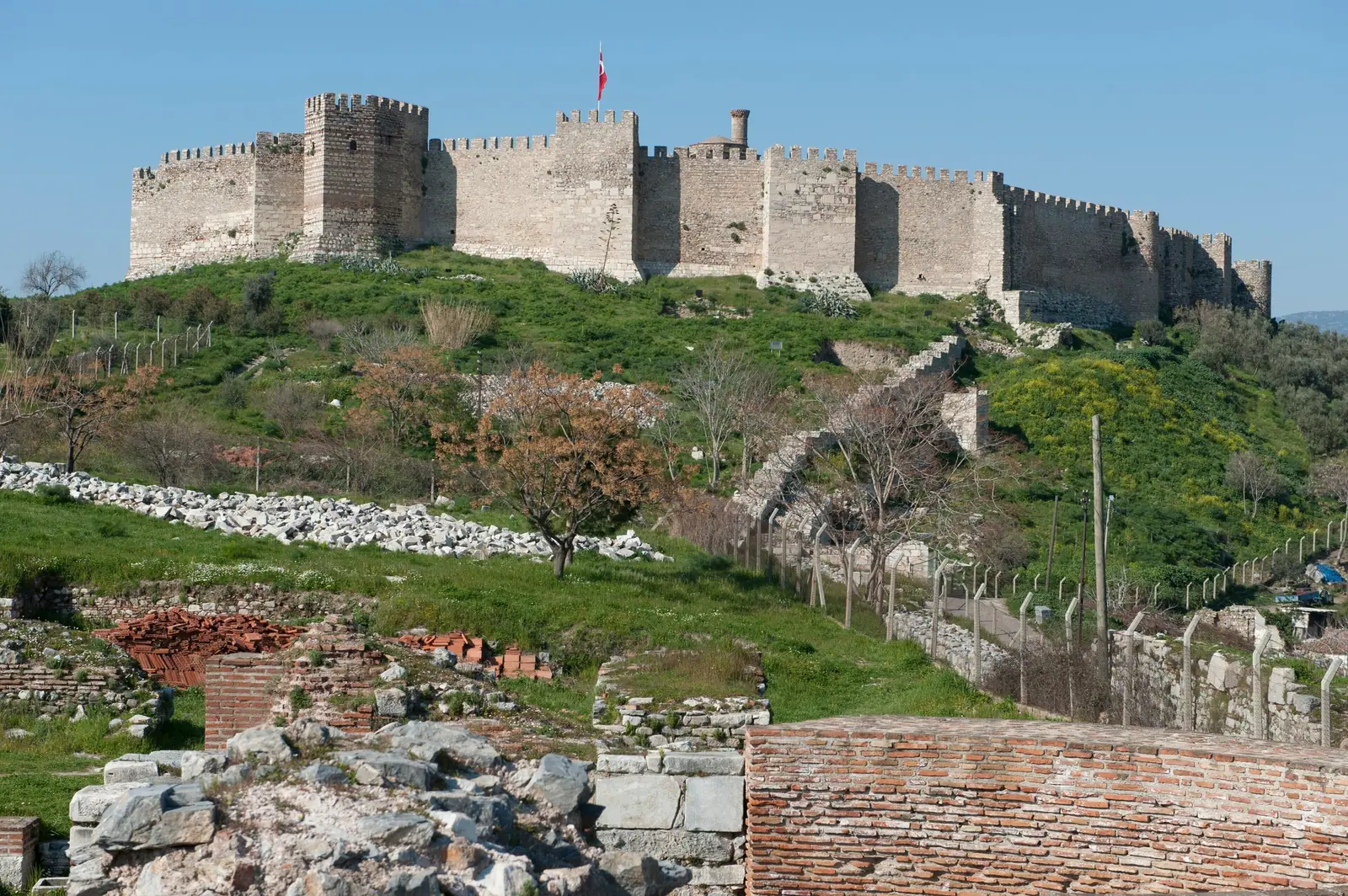
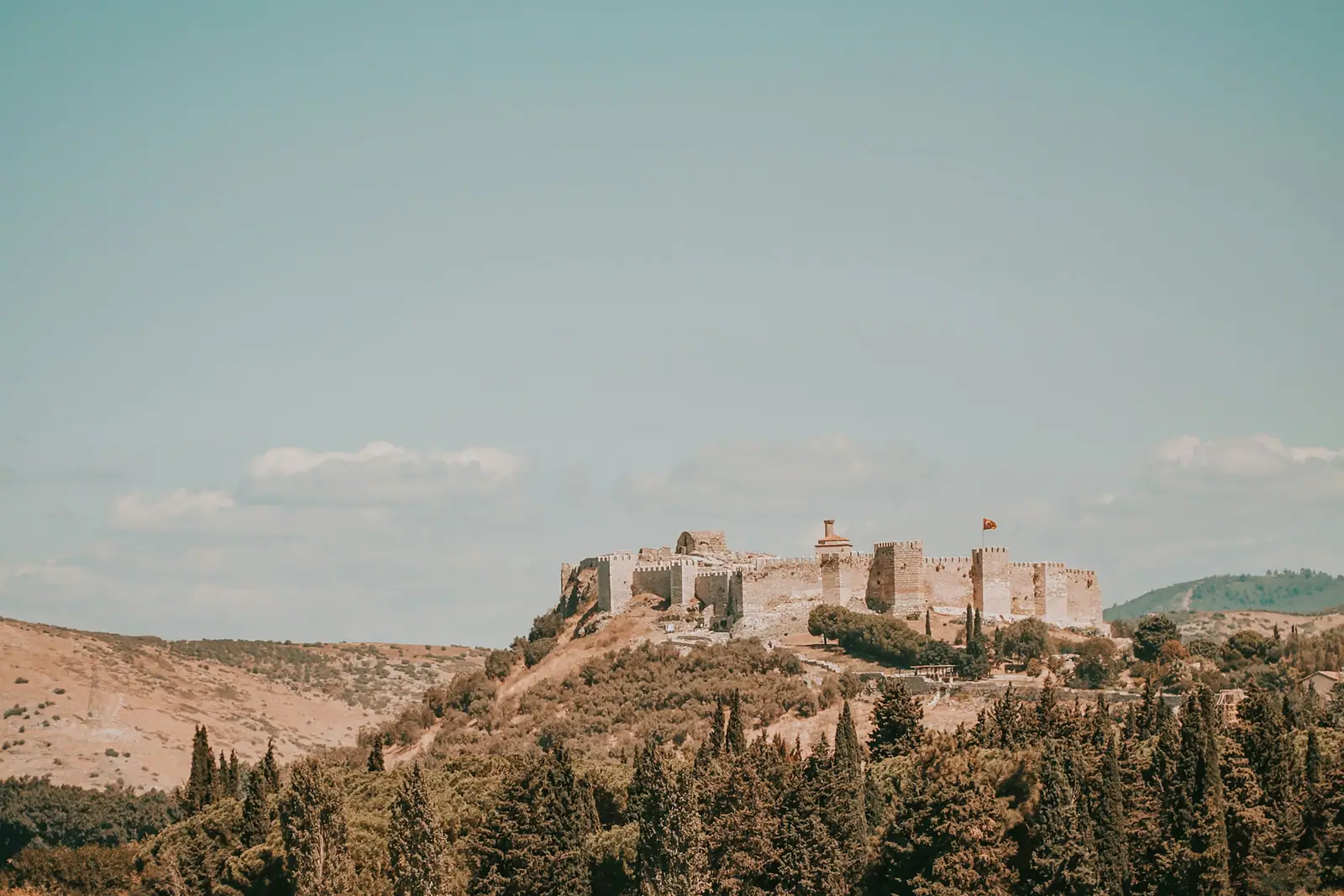
From the road into Selcuk you cannot miss it: a long line of battlemented walls and towers on the hilltop, with a Turkish flag on the highest one. That is Ayasuluk Castle, and after years behind restoration fences it is open to visitors again.
The short answer
Ayasuluk Castle is the Seljuk and Ottoman fortress on top of Ayasuluk Hill in Selcuk, directly above the Basilica of St. John, about 20 to 25 minutes by road from the Kusadasi cruise terminal. It is open. The Ministry lists it inside the St. John archaeological site, with the castle itself visited between 09:00 and 16:00, and the walk up from the basilica is the part of the hill most cruise guests never see.
- Also called
- Ayasuluk Fortress, Selcuk Castle; Ayasuluk Kalesi in Turkish
- Where
- top of Ayasuluk Hill in Selcuk, above the Basilica of St. John and the Isa Bey Mosque
- From the port
- about 20 to 25 minutes by road
- Open
- yes; castle visited 09:00 to 16:00 (Ministry listing, October 2026)
- Ticket
- entered through the St. John archaeological site; no ticket is included in our tours
- On our tours
- seen from below on every Selcuk stop; the climb fits a custom day or a longer call
What is Ayasuluk Castle?
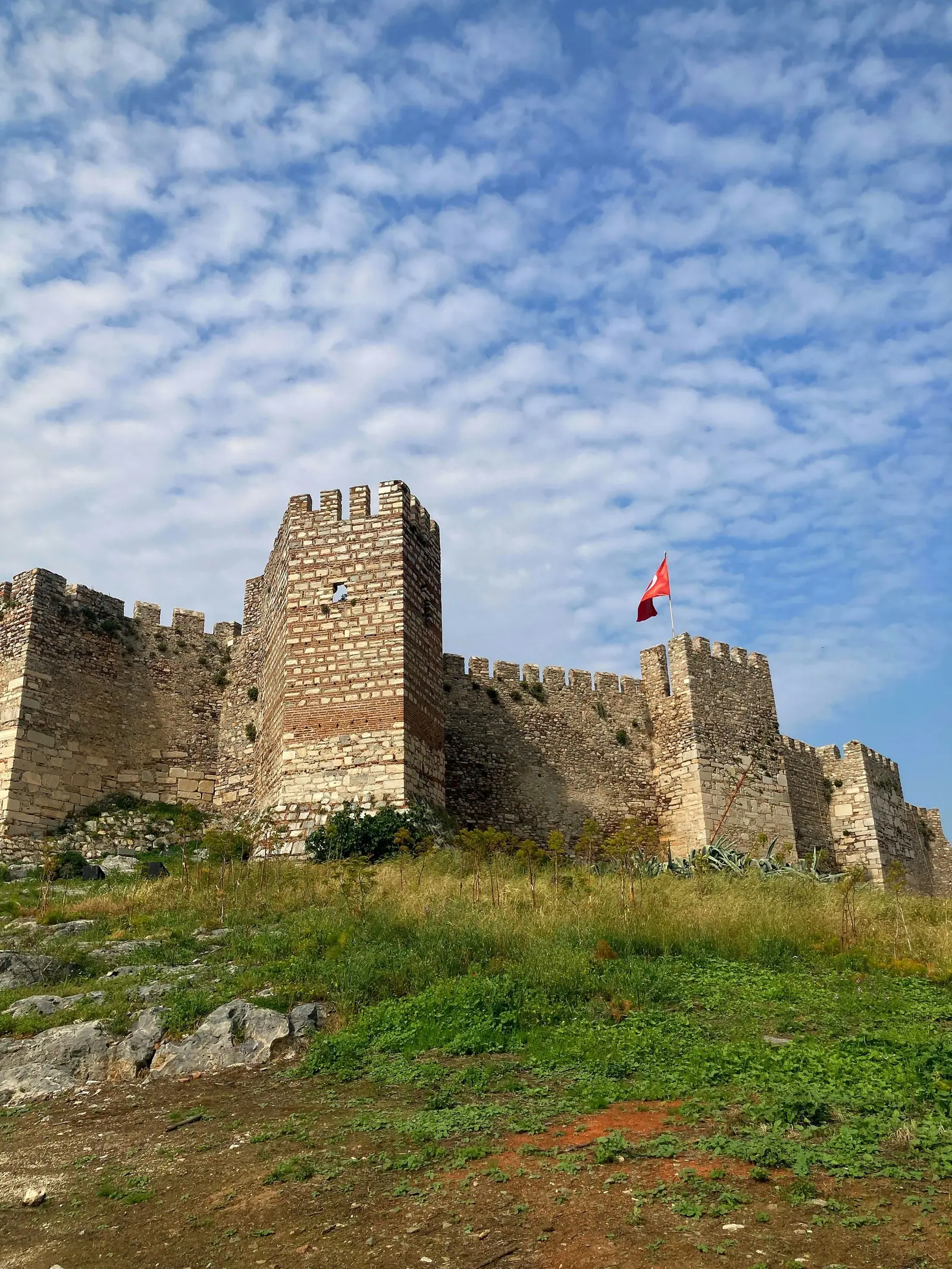
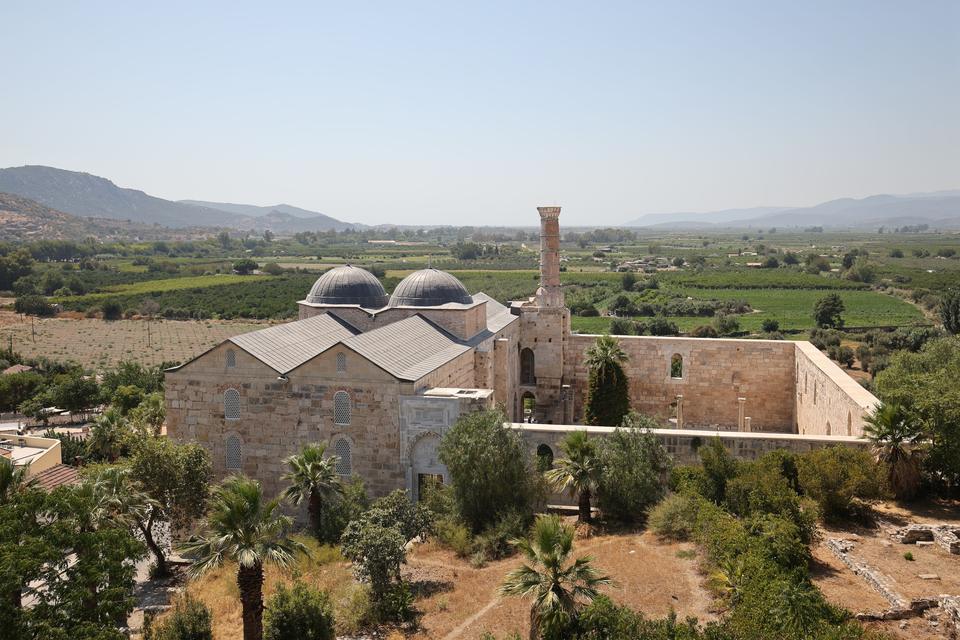
It is the walled fortress that crowns Ayasuluk Hill, the mound that rises straight out of the rooftops of Selcuk. The walls you see today are Seljuk and Ottoman work standing on Byzantine foundations: rubble and reused ancient stone, strengthened with fifteen towers, with a gate on the west side and another on the east. Inside the inner castle there are five cisterns, a small castle mosque, and the base of a pavilion with its own bath.
The name is older than the walls. When the people of Ephesus moved up here in the seventh century, the hill took the Greek name of the apostle buried on it, Hagios Theologos, the Holy Theologian. Turkish speakers turned that into Ayasuluk, and the town below carried the name until it became Selcuk in the twentieth century. So the castle, the hill and the old name of the town are one and the same story.
Where is it, and how far is it from the Kusadasi cruise port?
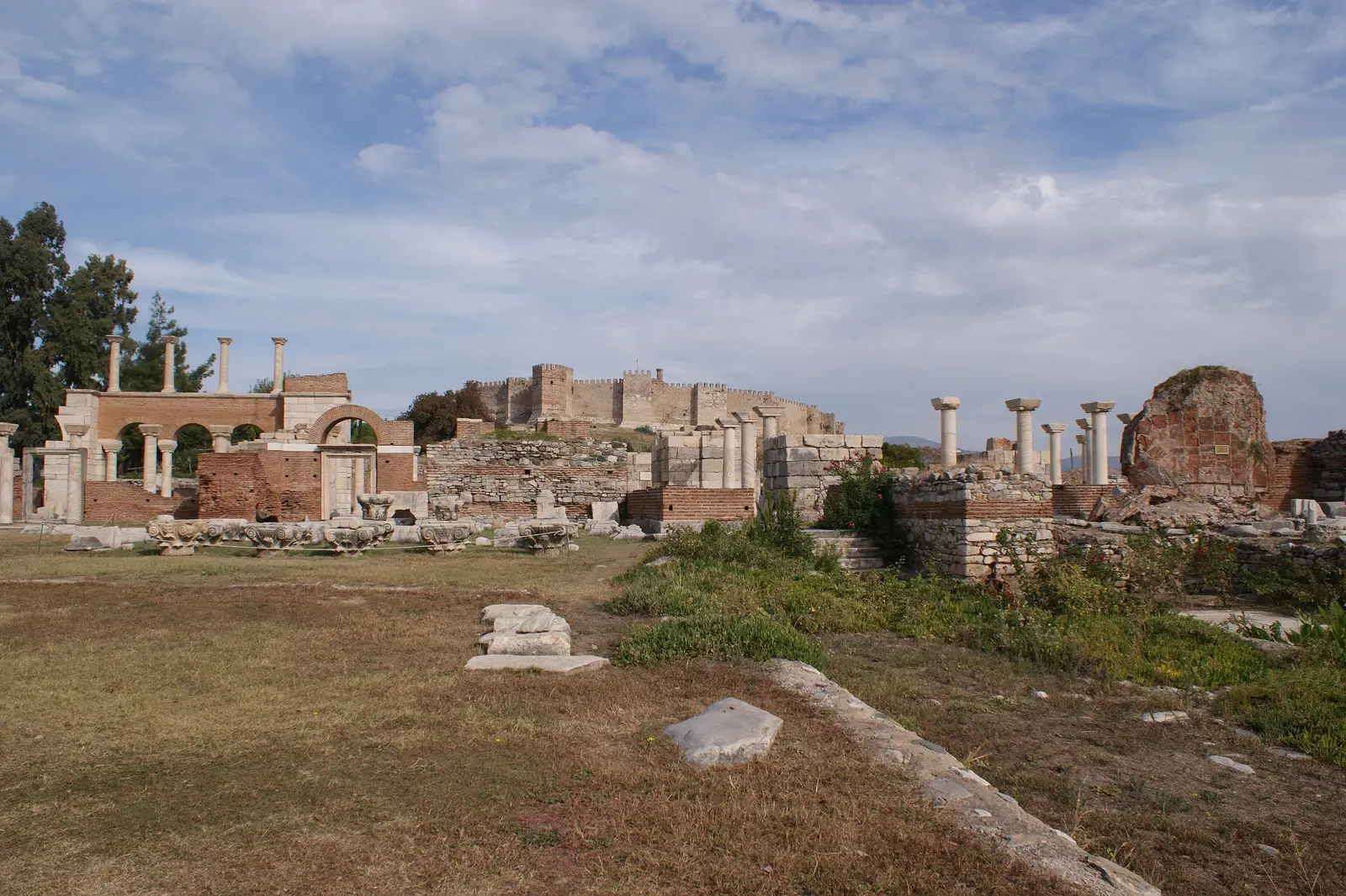
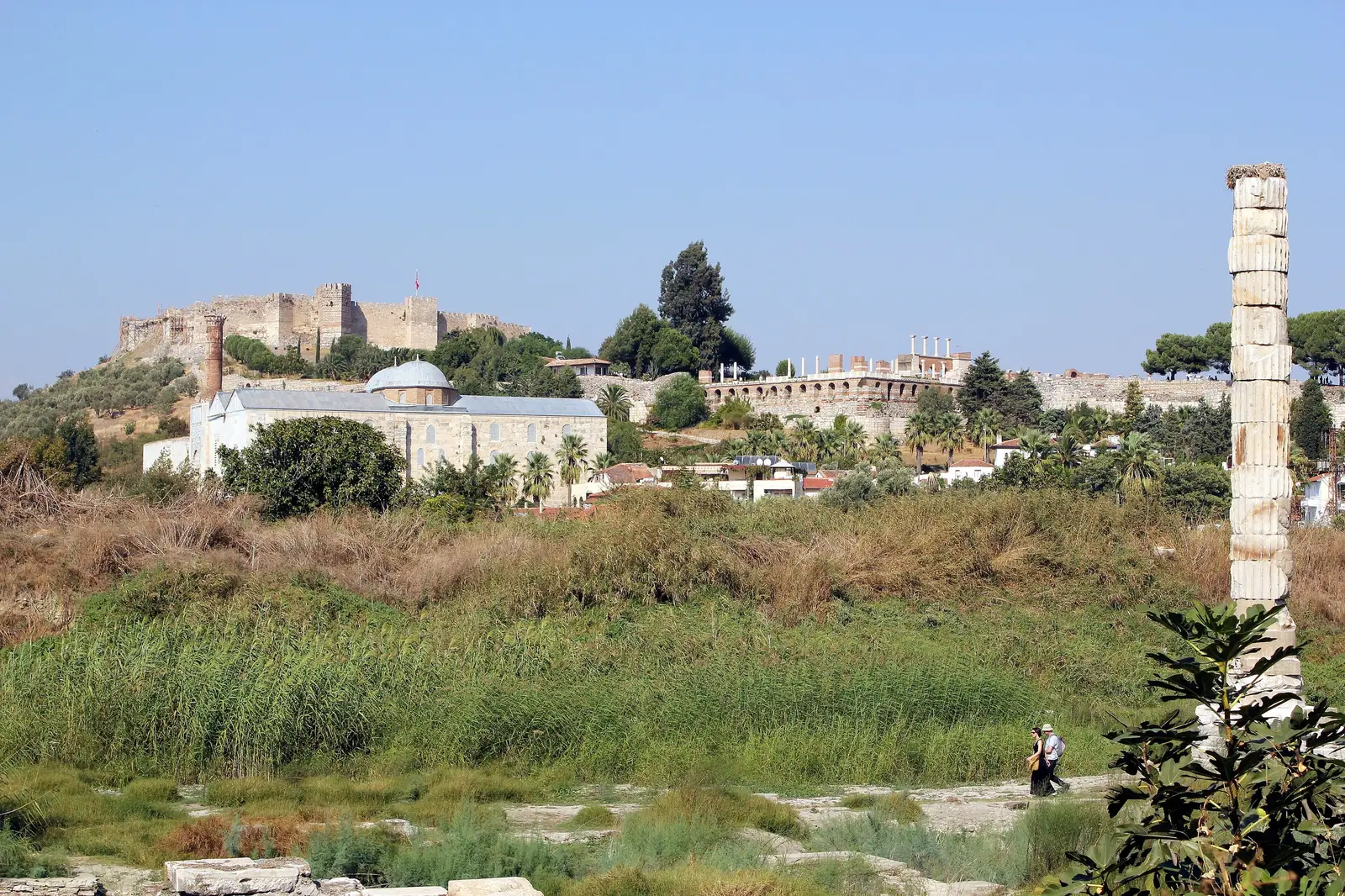
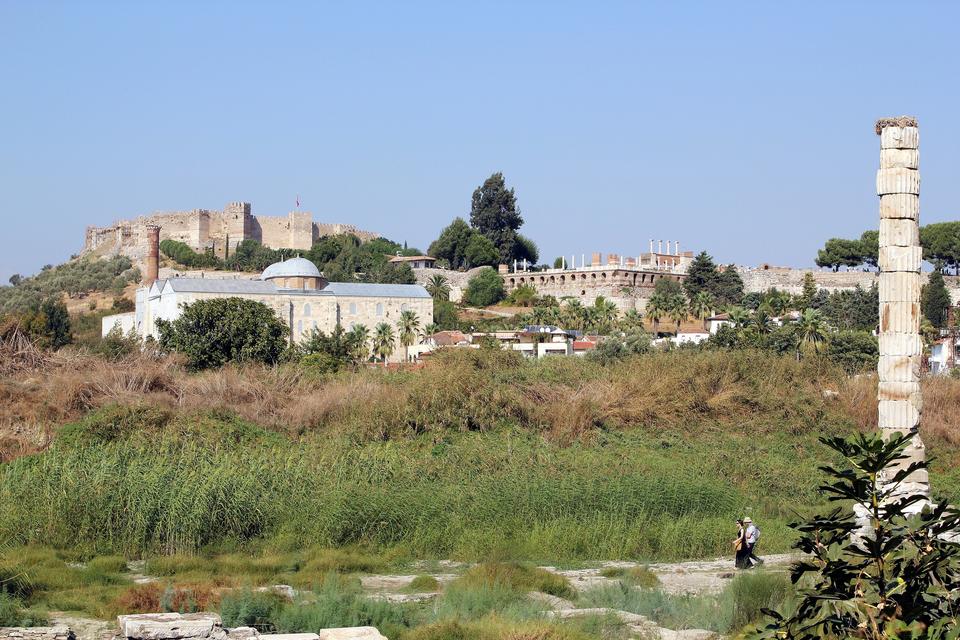
On the hilltop in Selcuk, about 20 to 25 minutes by road from the cruise terminal, on the same road that reaches Ephesus. The Basilica of St. John spreads across the slope just below the walls, the Isa Bey Mosque sits at the foot of the hill, and the single column of the Temple of Artemis stands in the field beyond. From the Artemis field you can take all four in with one look: the column, the mosque, the basilica and the castle, stacked up the hill in that order.
The castle is not a separate trip. The Ministry of Culture lists it inside the St. John archaeological site, so you enter through the basilica's ticket office and walk up. The basilica opens earlier and closes later than the castle, which is why the castle keeps its own visiting window, 09:00 to 16:00 in the current listing.
Planning the day? Match a tour to your hours ashore
-
Time in port: Under 5 hours ashore
The Open-Air Circle
No tickets and almost no walking: Artemis, Selcuk and a drive past the ruins.
Tour length: 3-4 hours
-
Time in port: 5 to 8 hours
Just Ephesus
Ephesus from the Upper Gate down to the Lower Gate, and back with time to spare.
Tour length: 3-3.5 hours
-
Time in port: 8 to 9 hours
Marble, Mosaics and Artemis
All of Ephesus, the Terrace Houses and the Temple of Artemis.
Tour length: 5.5-6.5 hours
-
Time in port: 9 hours or more
The Road of Paul and John
Ephesus, the House of the Virgin Mary, St. John and Artemis.
Tour length: 6-7 hours
-
Time in port: Late arrival, tender or tight call
All-Aboard Ephesus
We plan backward from all-aboard and fit in only what fits.
Tour length: Fits your call
-
Time in port: You have your own list
Your Ship, Your Day
Tell us your ship and your wishes; we build the day around both.
Tour length: Fits your call
Every tour is private and priced from €33 per person for groups of 8 or more; smaller groups get a private quote. Any group size: 1 to 52 people per coach, and more coaches for larger groups. Entrance tickets are extra, at the official price.
How old is Ayasuluk Hill?
Far older than the castle. Digs on the hill have found settlement from the Neolithic and the Early Bronze Age, and in the Late Bronze Age the hill was fortified. Archaeologists identify it with Apasa, the capital of the kingdom of Arzawa, a neighbor of the Hittites; Mycenaean pottery and seals have come out of the ground here. This was Ephesus before Ephesus. Around 560 BC the Lydian king Croesus moved the city down to the flat ground around the Temple of Artemis, and the Greek and Roman city later grew up on the slopes you visit at the Ephesus ruins.
In Roman times a military fort still stood on the hill. Then, in the seventh century, the harbor was silting up and Arab raids were reaching the coast, so the population of Ephesus moved back to where it had started. A fortress was built to protect the great church of St. John, and the hill became the town. Turkish rule came in the early fourteenth century; for a few decades the town was the capital of the Aydinid beylik, when Isa Bey built his mosque in 1375, and in 1402 Timur's army destroyed the basilica. The Seljuk and Ottoman rulers who followed rebuilt the walls into the castle you climb today.
What do you see inside the castle?
Mostly the walls themselves, and the view. The inner castle is a wide, grassy enclosure ringed by battlements, and you can walk along stretches of the wall and up onto the towers. Look for the cisterns: one of them is the east end of a Byzantine basilica, its apse turned into a water tank when the hill passed to Turkish rule, with a small bath built beside it. The castle mosque is a modest stone building near the middle.
The most interesting find is also the easiest to walk past. In 2009 the excavators uncovered the base of a square pavilion, about 11 by 10 meters, with marble doorways carved in the same vine patterns as the Isa Bey Mosque. They think Isa Bey built it around 1375 as his residence on the hilltop. An English traveler, John Covel, drew it as a two-story building in 1670; by 1690 it had vanished from the engravings. Today you see its footprint, and from it the whole valley.
Is the climb hard, and is it worth it on a port day?
It is a real hill, not a mountain. From the basilica a stone path leads up to the castle gate, and inside the ground is uneven, with steps up to the wall walks and no railings on some of them. Good shoes, a hat and water are enough for most people; our what-to-wear post covers the rest. The paths are not suitable for wheelchairs or walkers, so guests who need a level route stay with the basilica below, which has its own fine viewpoint.
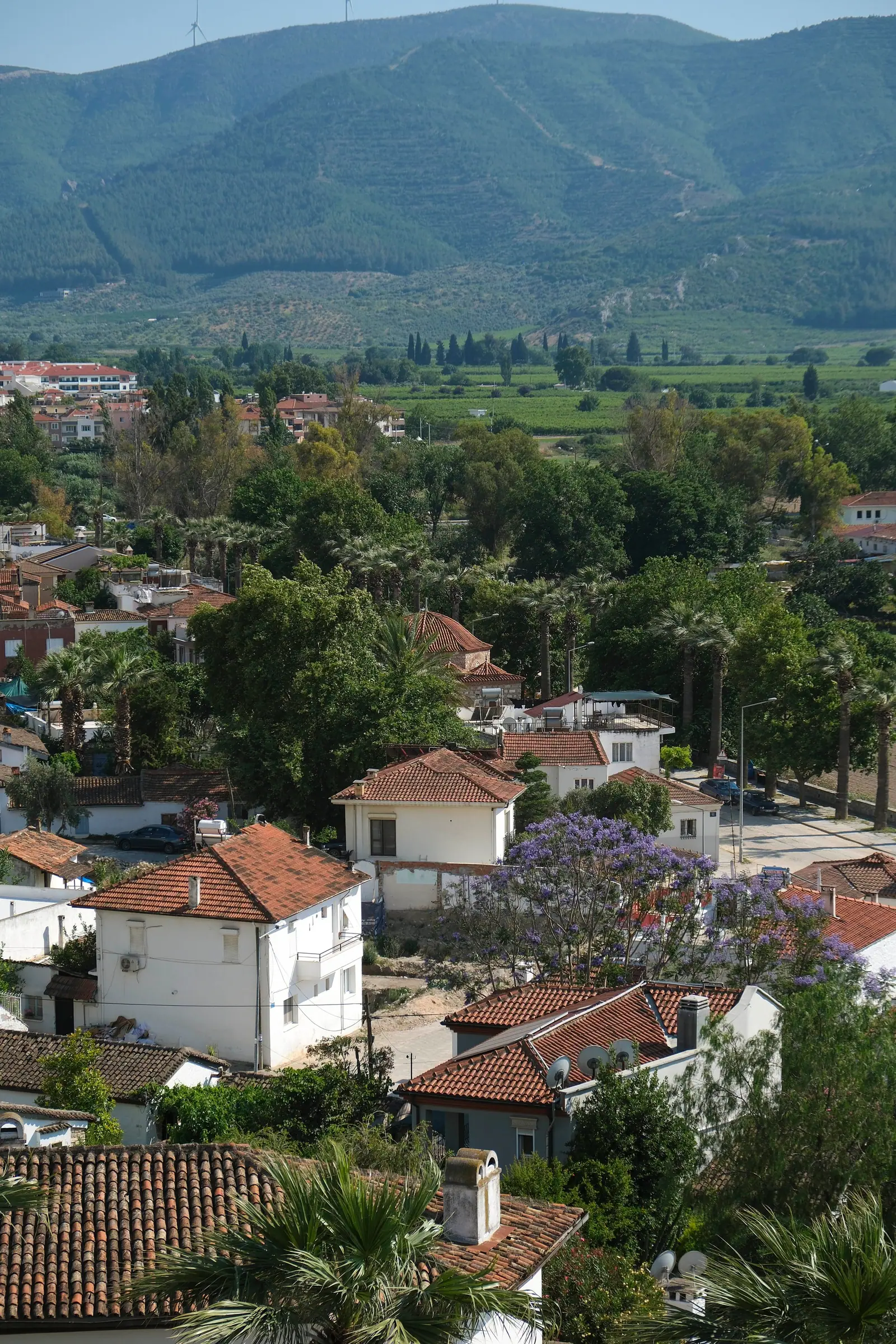
Worth it? Yes, if your ship gives you the hours. From the top you look down on Selcuk's red roofs, the lead domes of the Isa Bey Mosque, the field of the Temple of Artemis and the green plain the river built as it pushed the sea back toward Kusadasi. On a clear day the layout of the whole valley makes sense in one look, which is exactly what a guide spends the morning explaining in words.
Which of our tours includes Ayasuluk Castle?
Every tour that stops in Selcuk sees the castle from below. On our Open-Air Circle (Panoramic) tour the Ayasuluk Hill viewpoint is one of the two stops we keep even on the shortest call, and it needs no ticket and almost no walking. Our Road of Paul and John tour visits the Basilica of St. John; on a long call, tell us you would like the castle walk and we build the extra time in after the basilica, before lunch in Selcuk.
If the castle is the reason you want to come ashore, our custom shore excursion is the right tool: you give us your list and your ship's hours and we shape the day around them. Entrance tickets are never included in our prices; the basilica ticket is paid at the official price at the gate. We meet you right outside the cruise terminal exit; the meeting point page shows the spot. Send your ship and date through our inquiry form and we will tell you whether the climb fits your day.
Questions cruise guests ask us
Is Ayasuluk Castle open to visitors?
Yes. It was closed for restoration for a number of years, which is why older photos and posts still show a "castle is closed" sign, but it is open now. The Ministry's current listing gives the castle a visiting window of 09:00 to 16:00.
Do you need a separate ticket for Ayasuluk Castle?
The Ministry lists the castle inside the St. John archaeological site, so you enter through the basilica's ticket office and walk up. Our prices never include entrance tickets; you pay the official price at the gate. The fees page has the basilica's price.
Is Ayasuluk Castle the same as Selcuk Castle?
Yes. Ayasuluk Castle, Ayasuluk Fortress and Selcuk Castle are three names for the one fortress on Ayasuluk Hill. Ayasuluk was the town's own name until the twentieth century.
How far is Ayasuluk Castle from the Kusadasi cruise port?
About 20 to 25 minutes by road, the same drive as the Basilica of St. John and the Isa Bey Mosque. It is in Selcuk, not in Kusadasi, and it is not the small fortress on Pigeon Island in Kusadasi harbor.
Can I see Ayasuluk Castle on a short cruise call?
From below, yes: the Ayasuluk Hill viewpoint is a stop on our 3 to 4 hour Open-Air Circle tour. The walk up into the castle needs a longer call, and we will tell you honestly whether your ship's hours allow it.
Add Info Ephesus as a preferred source on GoogleGoogle then highlights our articles for you in Top Stories and in its AI answers.
Read next
The sites
Tell us your ship. We will plan the day around it.
Send your ship name, date and all-aboard time, and we reply with a plan and an exact price within 24 hours.
Get My QuoteNo prepayment · Reply within 24 hours · TÜRSAB 15746
Prefer email? info@infoephesus.com
